.
.
The Framework: what each dimension covers
Rating scale and decision rules
What the ratings mean and how the overall status is set
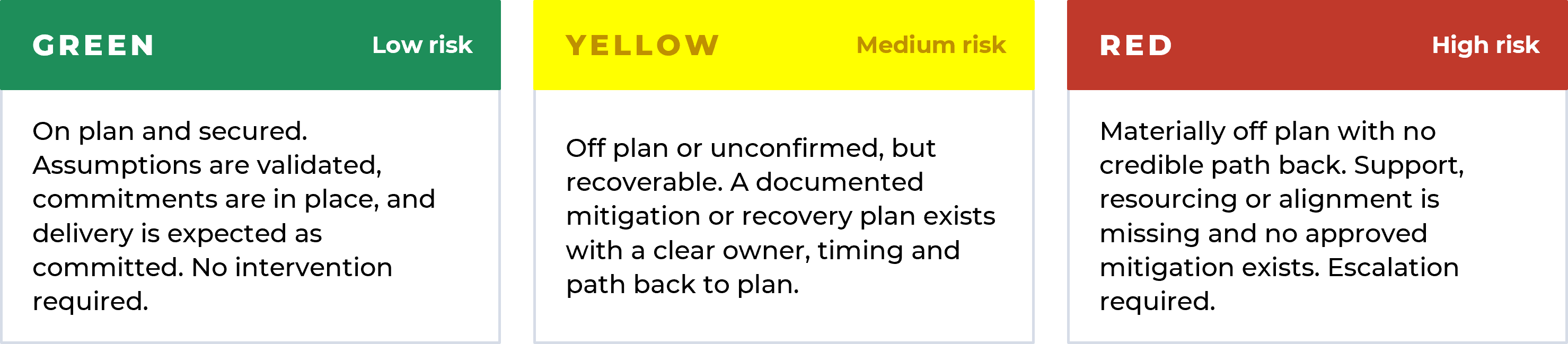
A project is rated on all five dimensions before an overall status is assigned.
01. Majority sets the status
More than 50% of the dimensions at the same risk level determines the overall risk level.
02. Ties escalate upward
If a project sits between two risk levels, the higher (more severe) level determines the final risk.
03. Tasks are always high risk
All task values must be classified as high risk — they represent unidentified or undefined gap-to-plan.
Reference
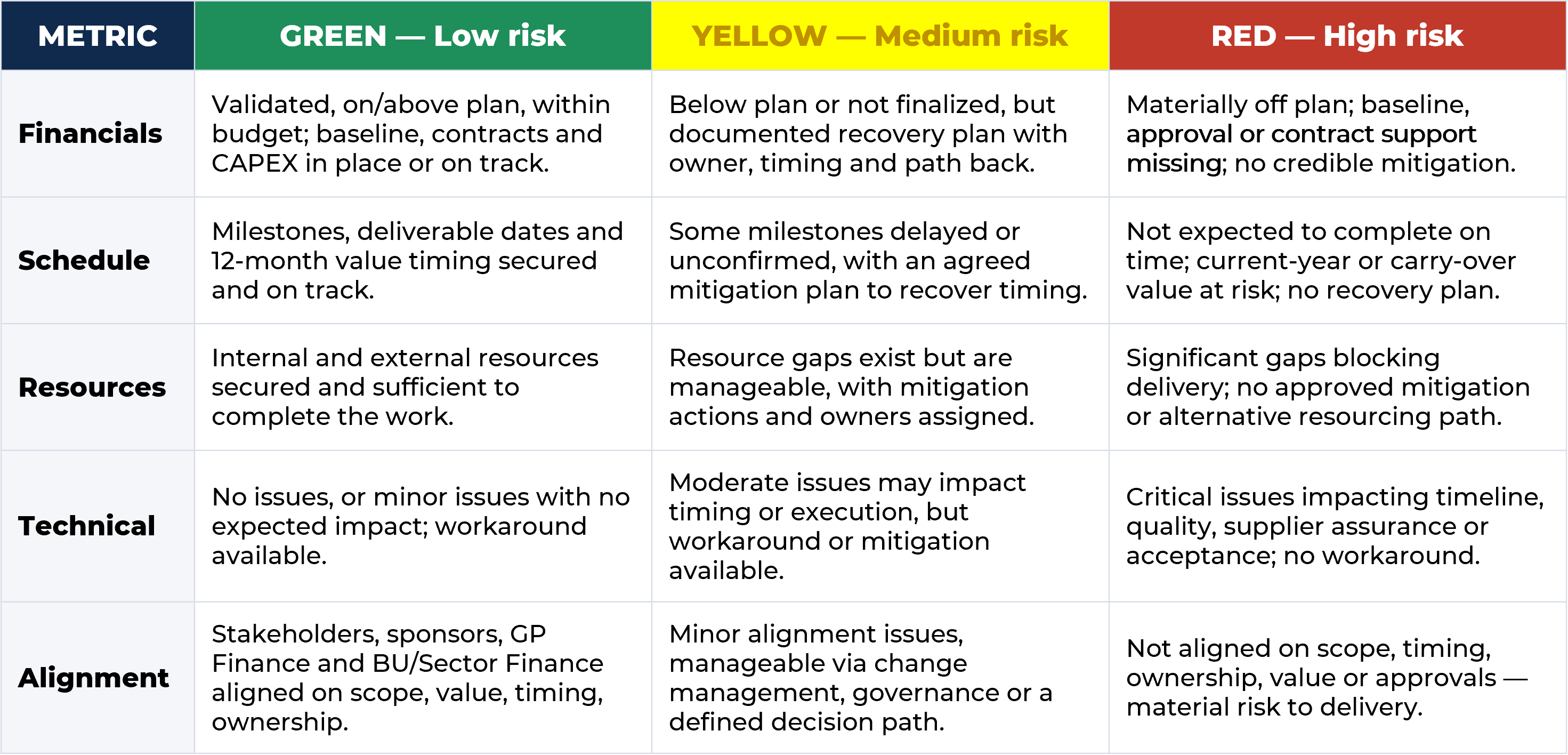
The full risk rating matrix
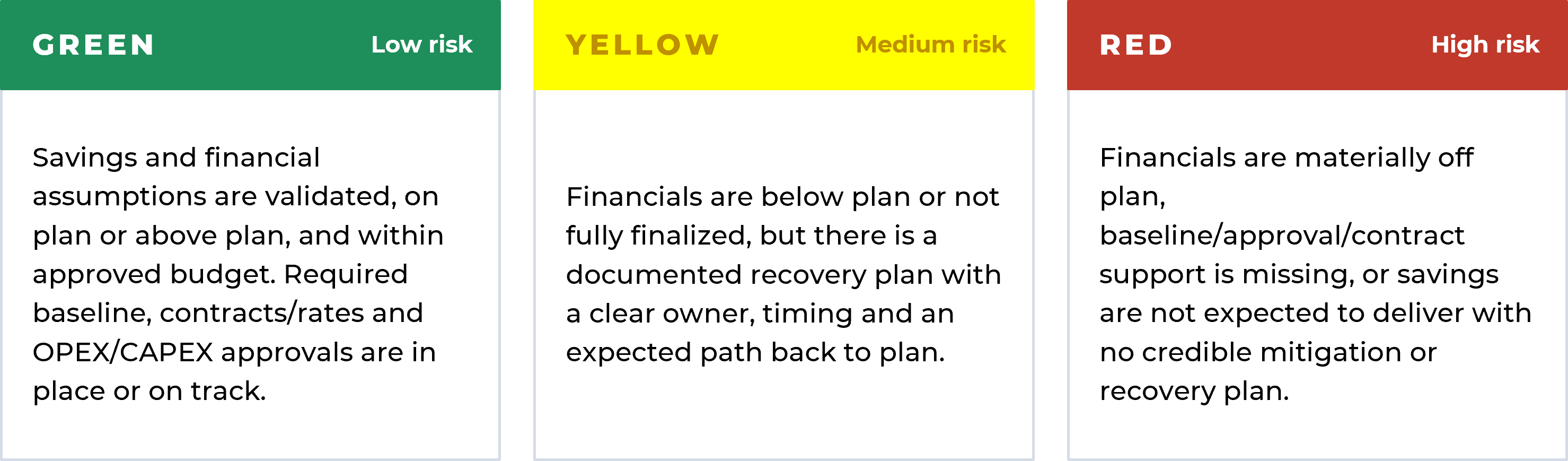
Dimension 1 of 5: Financials
Signed contracts · Fixed CY rates · Identified baseline · CAPEX approvals
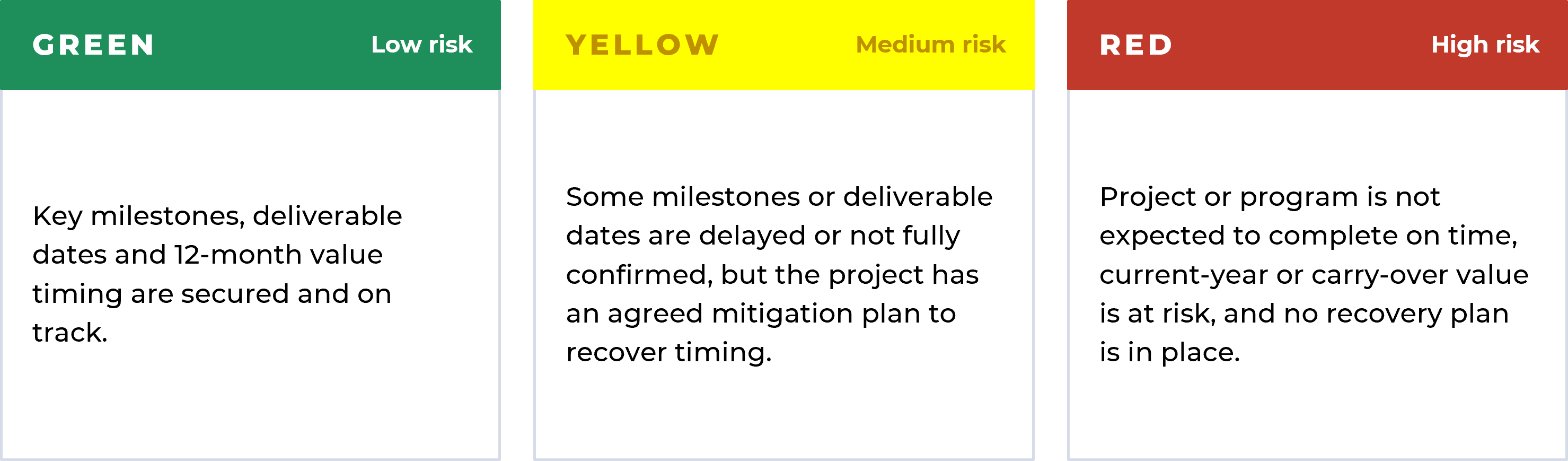
Dimension 2 of 5: Schedule
Secured timing · 12-month value (current year and carry-over)
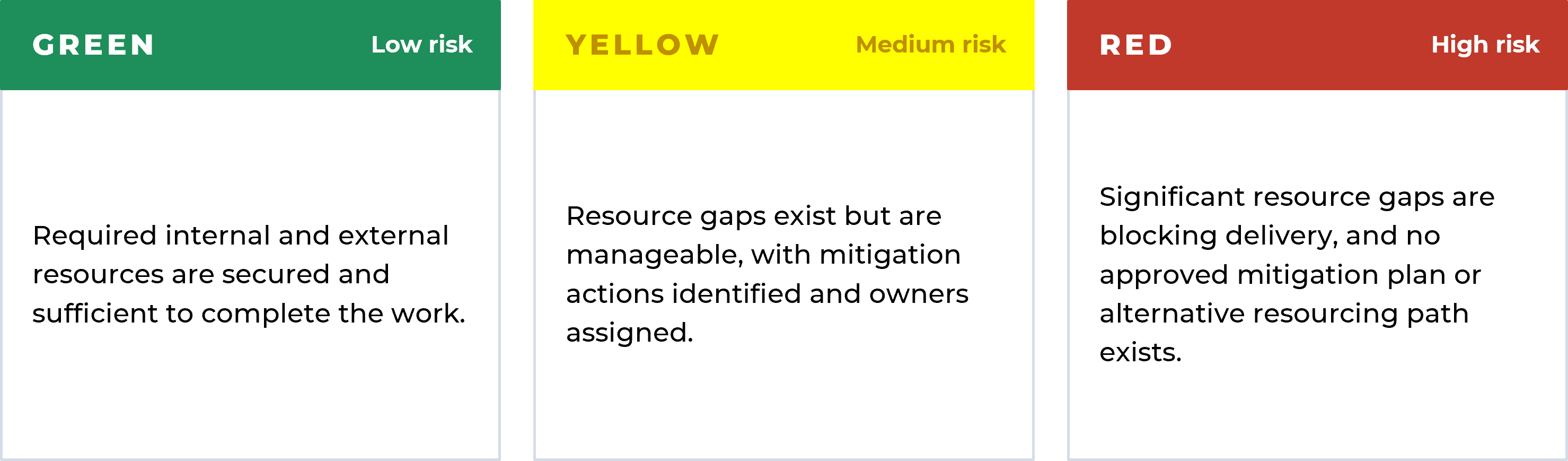
Dimension 3 of 5: Resources
R&D · Technology · Operations incl. plant and equipment · External and supplier
Dimension 4 of 5: Technical
Supplier quality assurance · Business acceptance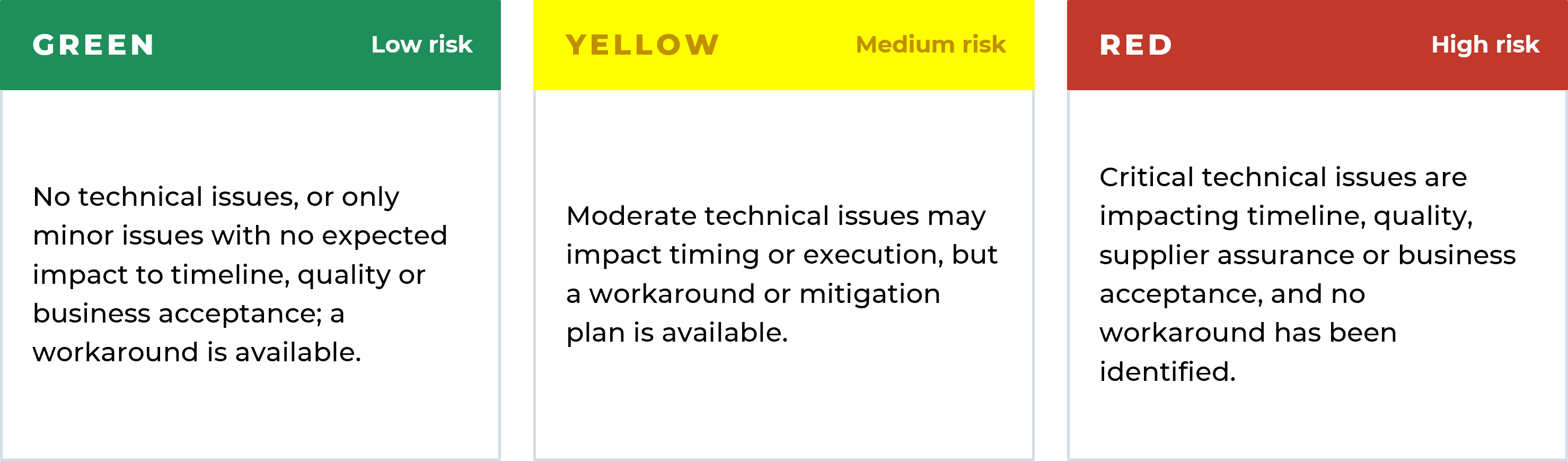
Dimension 5 of 5: Alignment
Key stakeholder alignment · Validated by GP Finance and BU/Sector Finance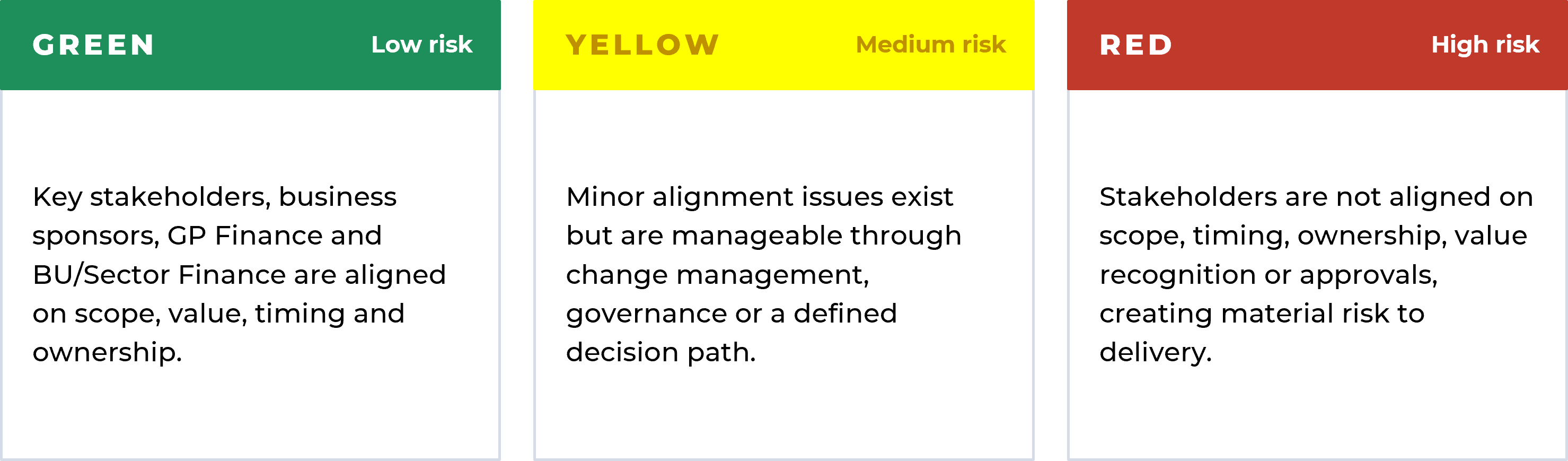
Definitions
jdidjdidj