Home

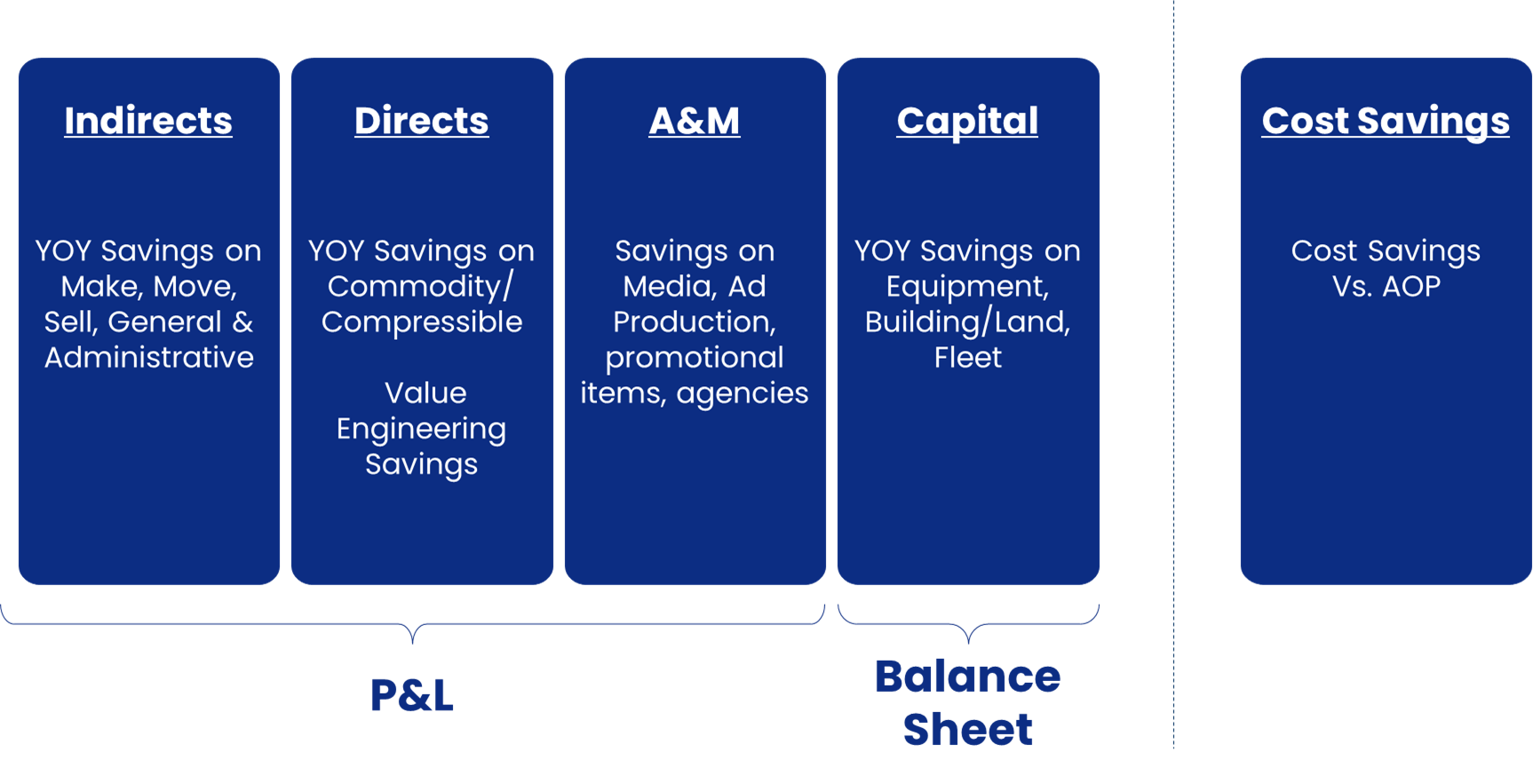
Global Procurement Areas of Reportable Productivity

Key Definitions Critical to Understanding Cost Savings​

    1. DEFINITION OF “PRODUCTIVITY”​

    Productivity denotes cost-saving efforts that result in Year over Year (YoY) reductions in fixed and variable expenses, excluding any effects from volume leverage. To qualify as reportable productivity initiative, there must be an established historical baseline for the initiative. 

    2. YOY PRODUCTIVITY DRIVERS​

    Two Levers Drive YOY Directs Productivity:​

    1. Reduction in negotiated rates (cost per unit) YOY and/or Conversion Cost Rates (Direct) YOY
    2. Reduction in input costs through Value Engineering initiatives ​
       

    3. PRODUCTIVITY SAVINGS AMOUNT​

    Productivity Savings Amount:

    (YoY change in cost per unit) * (# of units purchased in the current year), (CY rate - PY rate) * CY volume

    Conversion calc = (YoY change in conversion rate per unit) * (volume in current year)

    Value Engineering calc = (YoY change in input material cost per unit) * (volume in current year)

    4. TOTAL COST OF OWNERSHIP​

    The YOY Productivity includes Total Cost of Ownership (TCO) and must be validated by Business Finance. TCO is the guiding principle of productivity Net of inflation & incremental costs.​

    5. PRODUCTIVITY REPORTING

    PoweerSteering serves as the main platform for tracking all savings initiatives, including productivity improvements, cost reductions or avoidance, and it is the sole site used for reporting these savings. 

Principles of Productivity

What are the key principles of recognizing Productivity?​


  • Ensure YOY Productivity​
    • Based on tangible cost reductions over comparable Prior Year (PY) baseline​
    • Follow Total Cost of Ownership (TCO) as a guiding principle​
    • Net of inflation & incremental costs to achieve productivity​
    • Includes total delivered costs (e.g., Duties, Freight & Taxes), Rebates and Penalties​
  • Record 12 months rolling Productivity​
  • Validate Productivity calculations with Business Finance​
    • Must be in PowerSteering (productivity reporting system)​
    • Volume reduction in value engineering/total project cost/efficiency/optimal use of resources due to intentional changes and action taken can be counted as productivity. Fluctuations in volumes due to simple business changes/supplier mix is not productivity

Major types of expenses within each OPEX bucket​

    MAKE

    • Repair and Maintenance​
    • Facilities ​
    • Utilities​

    MOVE

    • Transport/Freight​
    • Warehousing​
    • Distribution​
    • Pallets​

    G&A​

    • Compensation & Benefits​
    • Office Lease & Supplies​
    • Technology Services
    • T&E/Meetings/Consulting​

    SELL

    • Lease/rentals​
    • POS/Promo​
    • Equipment service​
    • Last mile distribution​